1275 McConnell Drive, Suite H. Decatur, GA 30033
If you are missing one or more teeth in Decatur, GA, you have likely wondered what your best replacement option is. A dental bridge is one of the most time-tested solutions available today. But is a dental bridge right for your missing teeth in Decatur? That depends on several personal health factors. At Druid Hills Dental Decatur, Dr. Ian Carlson helps patients evaluate their unique situation before recommending any treatment.
What Is a Dental Bridge and Who Is It Designed For?
A dental bridge literally bridges the gap left by a missing tooth or multiple adjacent missing teeth. It anchors to the natural teeth on either side of the gap, called abutment teeth. A false tooth, called a pontic, sits in between. The result is a fixed, natural-looking restoration that functions like your real teeth.
Bridges work best for patients who meet certain basic criteria. You must have healthy teeth on both sides of the gap to serve as anchors. Those anchor teeth need to be strong enough to support the added pressure of chewing. If your surrounding teeth are compromised, other options may suit you better.
Patients who are good candidates typically have good oral health overall. You should not have active gum disease or significant bone loss in the jaw. Dr. Carlson will review your full dental history during your evaluation. This helps him understand whether a bridge is the right long-term choice for you.
How Dr. Carlson Evaluates Your Candidacy for a Dental Bridge in Decatur
The evaluation process at Druid Hills Dental Decatur is thorough and patient-focused. Dr. Carlson starts with a comprehensive exam of your teeth, gums, and jaw. He also takes digital X-rays to assess bone density and root health. These images reveal details that a visual exam alone cannot show.
During your visit, Dr. Carlson will ask about your dental history and any symptoms you have experienced. He wants to understand how long the tooth has been missing and what caused the loss. Trauma, decay, and periodontal disease each affect the surrounding tissue differently. That context shapes the entire treatment recommendation.
The evaluation also looks at the health of your abutment teeth. If those teeth have large fillings, cracks, or decay, they may not support a bridge reliably. In some cases, Dr. Carlson may recommend treating those teeth first. Getting the foundation right is essential for a bridge that lasts.
- Comprehensive oral examination of teeth and gums
- Digital X-rays to assess bone and root health
- Review of your dental and medical history
- Assessment of abutment tooth strength and stability
- Discussion of your lifestyle, habits, and long-term goals
Factors That Determine Whether a Bridge Is Your Best Option
Several specific factors influence whether a dental bridge is your ideal solution. Understanding these helps you have a more informed conversation with Dr. Carlson. No two patients have the same oral health profile. That is why a personalized evaluation matters so much.
One major factor is the number and location of missing teeth. A traditional bridge works best when one or two adjacent teeth are missing. If you are missing several teeth in different areas of your mouth, other approaches may be more practical. Dr. Carlson will map out your specific situation clearly.
Another key factor is jaw bone density. Unlike dental implants, a bridge does not require bone grafting. However, significant bone loss can still affect how the gum tissue looks beneath the pontic. Addressing gum health before placing a bridge leads to better aesthetic and functional outcomes.
Your bite pattern also plays a role. Patients who grind their teeth, a condition called bruxism, place extra stress on dental restorations. Dr. Carlson may recommend a night guard alongside your bridge. This protects your investment and extends the life of the restoration.
- Number and location of missing teeth in your mouth
- Condition and strength of neighboring anchor teeth
- Current gum health and presence of periodontal disease
- Bone density in the jaw beneath the gap
- Habits like teeth grinding that affect restoration longevity
- Your aesthetic goals and how visible the gap is when you smile
Dental Bridge vs. Other Missing Tooth Solutions
Understanding how a bridge compares to other options helps you make a confident decision. The two most common alternatives are dental implants and partial dentures. Each has distinct advantages depending on your candidacy. Dr. Carlson will explain all your options without pressure.
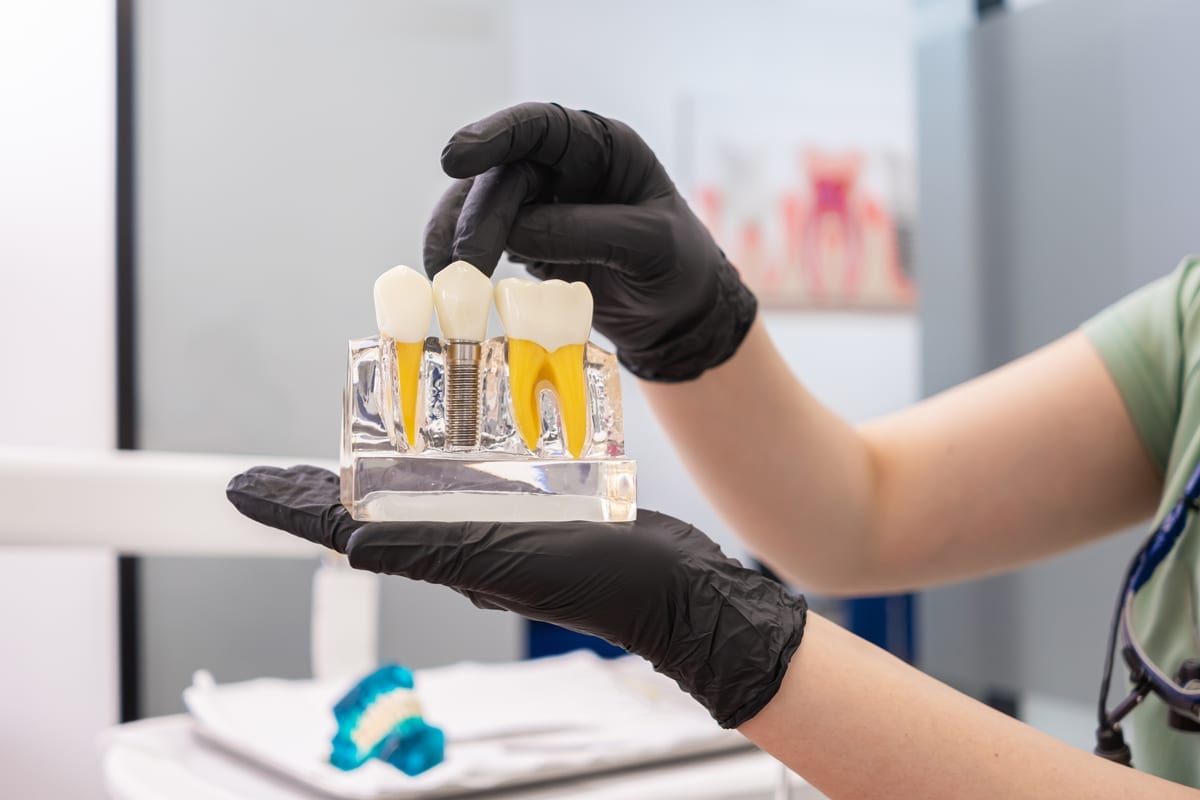
Dental implants are often considered the gold standard for tooth replacement. They preserve jaw bone and do not rely on neighboring teeth for support. However, implants require surgery and sufficient bone density. Not every patient is a candidate right away, and the timeline is longer.
Partial dentures are removable and less invasive. They can replace multiple teeth across different areas of the mouth. However, many patients find them less comfortable than fixed restorations. A bridge offers a permanent, non-removable solution that feels much closer to a natural tooth.
For patients dealing with sudden tooth loss or dental pain, prompt care is essential. Emergency Dentistry Decatur services at Druid Hills Dental Decatur are available to address urgent dental situations. Getting timely care can preserve more of your natural tooth structure. That often makes future restorations like bridges more successful.
If your primary concern is the appearance of your smile, a bridge can also deliver excellent cosmetic results. Many patients explore Cosmetic Dentistry Decatur options alongside restorative treatment. Combining approaches can give you both function and aesthetics. Dr. Carlson takes the time to understand what matters most to you.
What to Expect After Deciding a Bridge Is Right for You
Once Dr. Carlson confirms you are a good candidate, the bridge process typically involves two main appointments. At the first visit, he prepares the abutment teeth by reshaping them slightly. This creates room for the dental crowns that will anchor the bridge. A temporary bridge protects your teeth while the permanent one is crafted.
The permanent bridge is custom-made in a dental laboratory. It is designed to match the color, size, and shape of your natural teeth. At your second visit, Dr. Carlson removes the temporary bridge and bonds the permanent one in place. He then checks your bite carefully to ensure proper alignment.
Recovery is generally straightforward. Most patients experience mild sensitivity for a few days after placement. Eating softer foods initially helps your mouth adjust. With proper care, a well-placed dental bridge can last ten to fifteen years or longer.
Conclusion
Determining whether a dental bridge is right for your missing teeth in Decatur involves a careful evaluation of your oral health, bone structure, and personal goals. Dr. Ian Carlson and the team at Druid Hills Dental Decatur are here to guide you through every step of that process. You deserve a replacement option that fits your life, not just a generic recommendation. Book Now to schedule your appointment with our team.
Frequently Asked Questions
How long does a dental bridge last?
With proper oral hygiene and regular dental checkups, a dental bridge can last ten to fifteen years or more. Brushing, flossing around the bridge, and avoiding habits like teeth grinding all extend its lifespan. Dr. Carlson will give you specific care instructions at your appointment.
Is a dental bridge painful to get?
The procedure is performed under local anesthesia, so you should not feel pain during the appointment. Some sensitivity and mild soreness in the days following placement is normal. Over-the-counter pain relievers typically manage any discomfort effectively during recovery.
Can I get a bridge if I have gum disease?
Active gum disease must be treated before placing a dental bridge. Placing a bridge over unhealthy gums puts the restoration and your surrounding teeth at risk. Dr. Carlson will identify and address any gum issues during your evaluation before recommending a bridge.
What is the difference between a dental bridge and a dental implant?
A dental bridge is a fixed restoration that anchors to natural teeth on either side of the gap. A dental implant is a titanium post surgically placed into the jaw bone that acts as an artificial root. Implants do not require altering neighboring teeth, but they require more time and sufficient bone density to place successfully.
How do I care for my dental bridge at home?
You should brush twice daily and use a floss threader or interdental brush to clean beneath the bridge. A water flosser can also be helpful for removing debris around the restoration. Regular cleanings at Druid Hills Dental Decatur help keep your bridge and surrounding teeth healthy long-term.