1275 McConnell Drive, Suite H. Decatur, GA 30033
If you have a missing tooth, your jawbone is already changing. Most North Decatur patients don’t realize this until the problem becomes much harder to fix. Waiting on implants gets harder over time — and the reason is bone loss. Dr. Ian Carlson at Druid Hills Dental Decatur sees this pattern regularly. The good news is that knowing the warning signs can help you act before your options narrow.
Why Your Jawbone Shrinks After Tooth Loss
Your teeth do more than chew food. Every time you bite down, your tooth roots send pressure signals deep into the jawbone. Those signals tell your body to keep building bone tissue in that area. When a tooth is lost, those signals disappear. Without stimulation, your body slowly reabsorbs the bone — a process called resorption.
Research shows that you can lose up to 25% of jawbone width in the first year alone after extraction. Over several years, the bone continues to shrink in both height and density. This is why waiting on implants in North Decatur gets progressively harder the longer you delay.
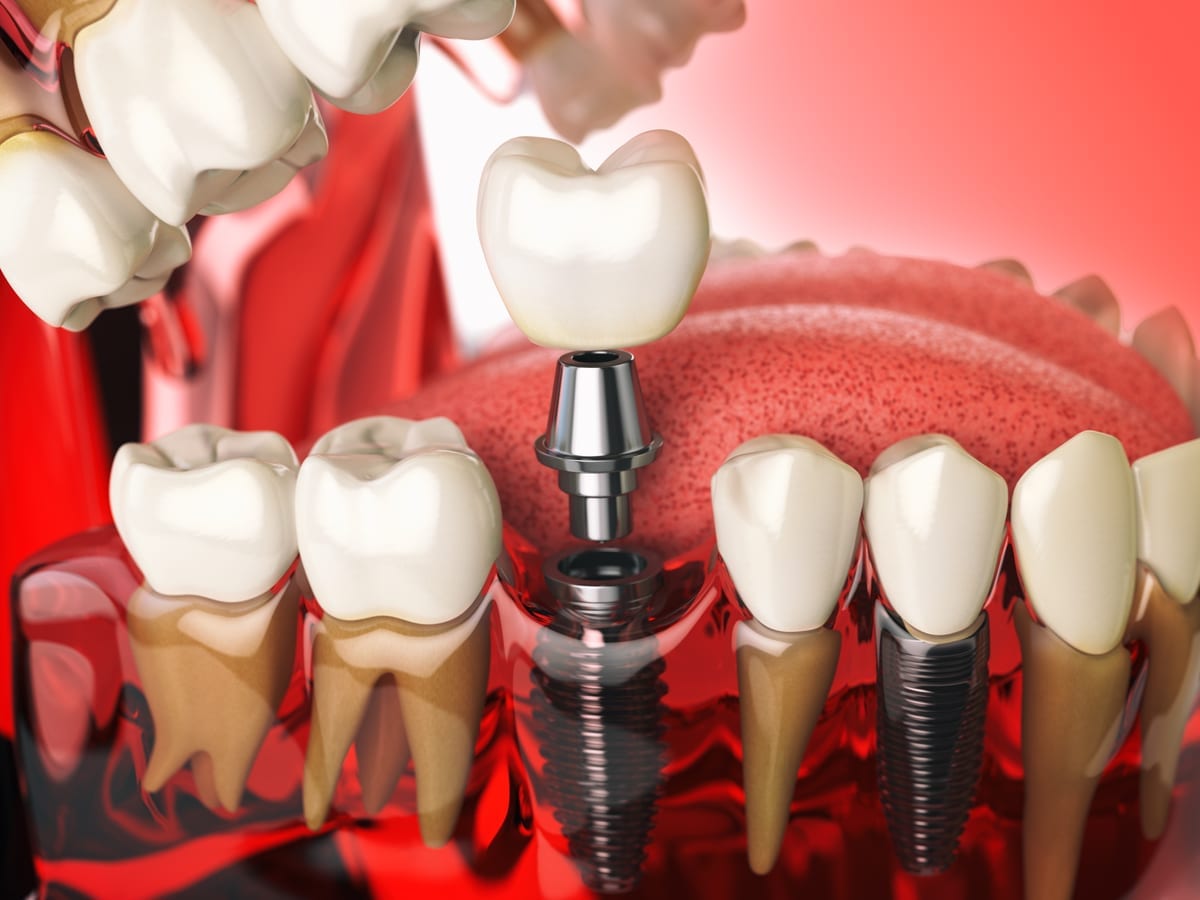
Dental implants are the only tooth replacement option that mimics a natural tooth root. They integrate with bone and restore that stimulation signal. Bridges and dentures sit on top of the gum — they do nothing to stop bone loss underneath.
Warning Signs You Have Already Lost Bone
Bone loss is silent at first. Many patients don’t feel it happening. But over time, clear physical signs begin to appear. If you recognize any of these, schedule an evaluation with Dr. Carlson as soon as possible.
- Shifting or drifting teeth: Neighboring teeth lean into the gap left by a missing tooth. This misalignment is a direct result of bone loss destabilizing the area.
- Changes in your bite: Your upper and lower teeth may no longer meet the way they used to. This causes uneven chewing pressure and jaw strain.
- Sunken facial appearance: As the jawbone shrinks, the skin and soft tissue above it lose support. Your face may look older or hollowed near the cheeks or jaw.
- Difficulty chewing certain foods: Bone loss reduces the stability of surrounding teeth. Chewing becomes uncomfortable, especially with harder foods.
- Loose remaining teeth: Severe bone loss can cause even healthy teeth to feel wobbly. This is a serious warning sign that needs immediate attention.
- Ill-fitting dentures: If existing dentures no longer fit comfortably, bone shrinkage underneath is usually the reason.
These signs indicate that waiting has already cost you some bone volume. The question now is how much more you can afford to lose before implants become extremely difficult — or impossible — without additional procedures.
What Happens When You Wait Too Long in North Decatur
Placing a dental implant requires a minimum amount of healthy jawbone. The implant post needs solid bone to integrate with after surgery. When bone volume drops too low, a standard implant placement is no longer possible without additional steps.
Bone grafting is the most common solution for patients who have waited. A bone graft adds volume back to the jaw before an implant can be placed. This adds cost, healing time, and at least one extra surgical procedure to your treatment plan.
Some patients who have waited many years may require a sinus lift procedure as well. This is necessary when upper back teeth are missing and the sinus floor has dropped too close to where the implant needs to sit. These additional procedures extend your total treatment timeline significantly.
This is not meant to alarm you. It is meant to help you understand that acting sooner protects your options — and your wallet. Early implant placement is almost always simpler, faster, and more predictable than delayed placement.
How Shifting Teeth and Chewing Problems Compound Over Time
Bone loss does not stay isolated to the extraction site. As neighboring teeth shift into the gap, they create new problems throughout your mouth. Misaligned teeth are harder to clean, which raises your risk of cavities and gum disease. Those conditions then accelerate further bone loss — creating a cycle that is difficult to break.
Difficulty chewing also has real health consequences. Patients who avoid hard or fibrous foods often miss out on important nutrients. Over time, this affects overall health and quality of life in ways that go far beyond dental appearance.
Many of these downstream problems overlap with concerns addressed in Cosmetic Dentistry, including veneers and teeth straightening. Restoring a missing tooth with an implant often prevents the need for more extensive cosmetic work later. Early action protects the whole smile — not just the gap.
If shifting teeth or bite changes have caused sudden pain or sensitivity, that may require prompt evaluation. Acute pain from shifting or cracking teeth can qualify as a dental emergency. Druid Hills Dental Decatur also offers Emergency Dentistry services for patients dealing with urgent dental concerns.
What the Implant Process Looks Like When You Start Early
When bone volume is still adequate, the implant process is straightforward. Here is a simplified overview of what early-stage implant patients experience at Druid Hills Dental Decatur:
- Consultation and imaging: Dr. Carlson takes detailed X-rays or a cone beam CT scan to assess bone volume and structure at the extraction site.
- Treatment planning: A personalized plan is created based on your bone density, gum health, and overall oral health goals.
- Implant placement surgery: The titanium post is placed directly into the jawbone under local anesthesia. Most patients return to normal activity quickly.
- Healing and integration: Over several months, the implant fuses with the surrounding bone through a process called osseointegration.
- Crown placement: Once fully healed, a custom ceramic crown is attached. The result looks and functions like a natural tooth.
Patients who start this process with healthy bone volume move through each step more smoothly. There are fewer complications and less overall treatment time. That is the advantage of acting before bone loss advances further.
North Decatur Patients: The Right Time to Act Is Now
Every month of delay means more bone loss, more shifting, and more complex treatment ahead. Dr. Ian Carlson and the team at Druid Hills Dental Decatur are here to evaluate exactly where your bone health stands today. A cone beam scan gives a precise picture of remaining bone volume — so you know exactly what your options are before making any decisions.
You do not have to commit to anything at your first visit. But knowing what you are working with gives you the power to make an informed choice. North Decatur patients who address missing teeth early almost always have better outcomes with fewer additional procedures needed.
Don’t let time make this decision for you. Book Now to schedule your appointment with our team.
Frequently Asked Questions
How quickly does jawbone loss start after a tooth is extracted?
Bone resorption begins within the first few weeks after a tooth is lost. Studies show that up to 25% of jawbone width can be lost in the first year. The rate of loss slows after that but continues gradually over time without implant placement.
Can I still get a dental implant if I have already experienced significant bone loss?
Yes, in many cases. However, you may require a bone graft procedure first to rebuild adequate bone volume. Dr. Carlson evaluates each patient individually with imaging to determine the best approach for your specific situation.
Is bone grafting always necessary for delayed implant cases?
Not always. Some patients retain enough bone volume even after several years. The only way to know for certain is through a detailed scan. That is why an early evaluation is so important — it tells you exactly where you stand before problems progress further.
Why do teeth shift when a tooth is missing?
Teeth rely on neighboring teeth for positional support. When a tooth is removed, the surrounding teeth gradually drift or tilt into the open space. This shifting can alter your bite, increase cleaning difficulty, and put uneven stress on remaining teeth and jaw joints.
Does difficulty chewing mean I have bone loss?
Chewing difficulty can have several causes, but bone loss is a common factor when a tooth has been missing for some time. It may also result from shifting teeth or bite changes caused by an untreated gap. A dental evaluation will identify the exact cause and help you find an appropriate solution.